Charles (Xiaochang) Li
CS Ph.D. Student · William & Mary
I am a Ph.D. student in Computer Science at William & Mary since 2022, fortunately advised by Prof. Huajie Shao. My research focuses on Foundation Models and Multi-Modal Reasoning, aiming to empower multi-modal models with reasoning capabilities for complex real-world problems. Before my Ph.D., I received my M.S. in Data Science from East China Normal University fortunately advised by Prof. Xuesong Lu and Prof. Qiwen Dong, focusing on Natural Language Processing and Data Mining.
I welcome research collaborations on (M)LLMs, Reasoning — Please reach out!
Email: xli59 [at] wm [dot] edu
Research Interests
Research vision: I study how foundation models can be used for solving real-world problem with reasoning capabilities, with applications in network traffic, software, and systems.
- Foundation Model Building and Evaluation. (1) Training knowledge-guided foundation models for network traffic [Lens], [NetBench] (2) Evaluation of foundation models in software engineering [BEHELM]
- Foundation Model Steering. Test-time steering methods for improving foundation model behavior without additional training. [ODESteer]
- Foundation Model Deployment. Personalized privacy-preserving distributed learning for foundation models on heterogeneous edge devices. [P3SL]
News
2026.06: 🎉 Paper Lens: A knowledge-guided foundation models for network traffic accepted by TMLR!
2026.03: 🎉 Paper Westworld accepted by ICML 2026 Spotlight (top 2.2%)!
2026.03: 🎉 Paper OmniVul accepted by KDD 2026!
2026.01: 🎉 Paper ODESteer accepted by ICLR 2026!
2025.12: 🎉 Paper BEHELM accepted by FORGE 2026!
2025.07: 🎉 Paper P3SL accepted by ICCCN 2025!
2024.03: 🎉 Paper NetBench accepted by FMSys Workshop 2024!
2024.01: 🎓 Qualified to be a Ph.D. candidate at William & Mary!
Publications
("*" indicates equal contribution, "†" indicates corresponding author/co-advisor)
-
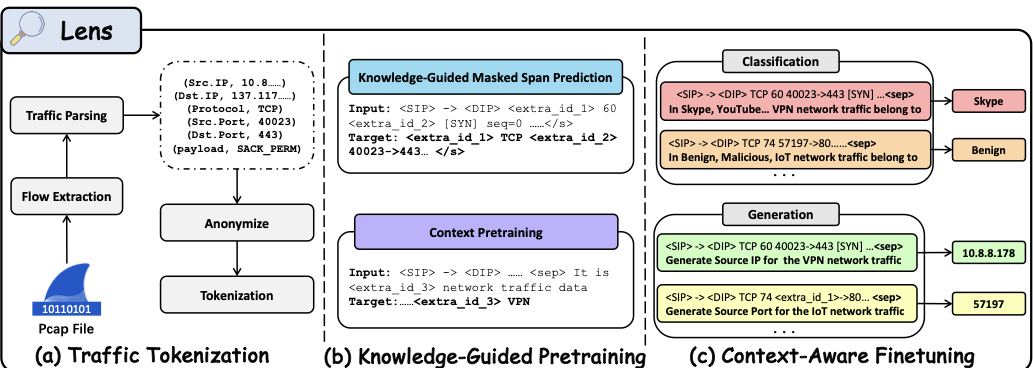 Lens: A Knowledge-Guided Foundation Model for Network TrafficXiaochang Li, Chen Qian, Qineng Wang, Jiangtao Kong, Yuchen Wang, Ziyu Yao, Bo Ji, Long Cheng, Gang Zhou, Huajie ShaoA knowledge-guided foundation model for network traffic that outperforms baselines on 8 of 12 classification tasks (96.33% avg. accuracy) and generates high-fidelity traffic with up to +30.46% accuracy and +33.3% F1 in fuzzing tests.
 -
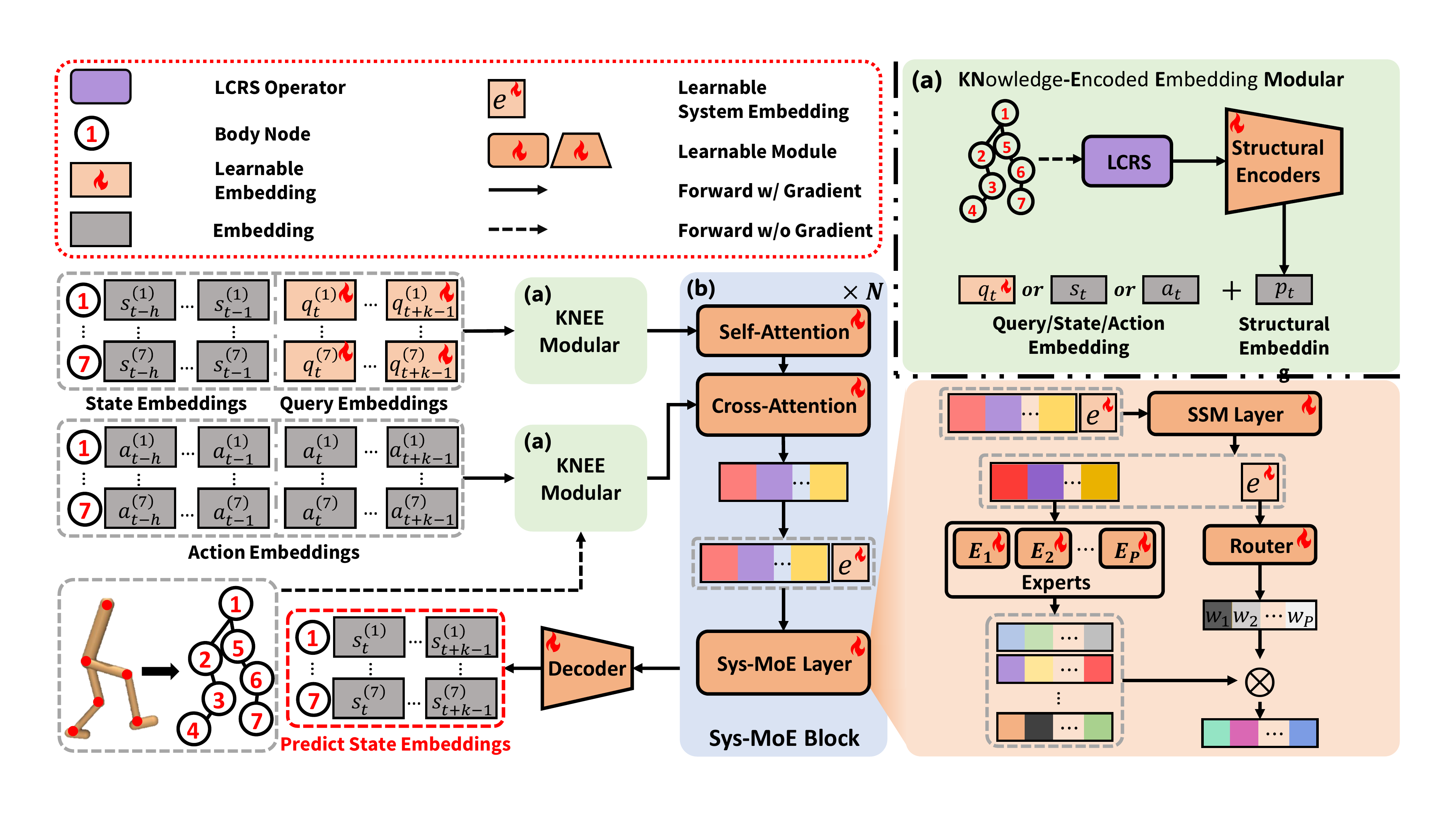 WestWorld: A Knowledge-Encoded Scalable Trajectory World Model for Diverse Robotic SystemsYuchen Wang*, Jiangtao Kong*, Sizhe Wei, Xiaochang Li, Haohong Lin, Hongjue Zhao, Tianyi Zhou, Lu Gan, Huajie ShaoWestworld achieves significant improvements zero- and few-shot trajectory prediction significantly with strong scalability and great performance improvement on downstream model-based control.
 -
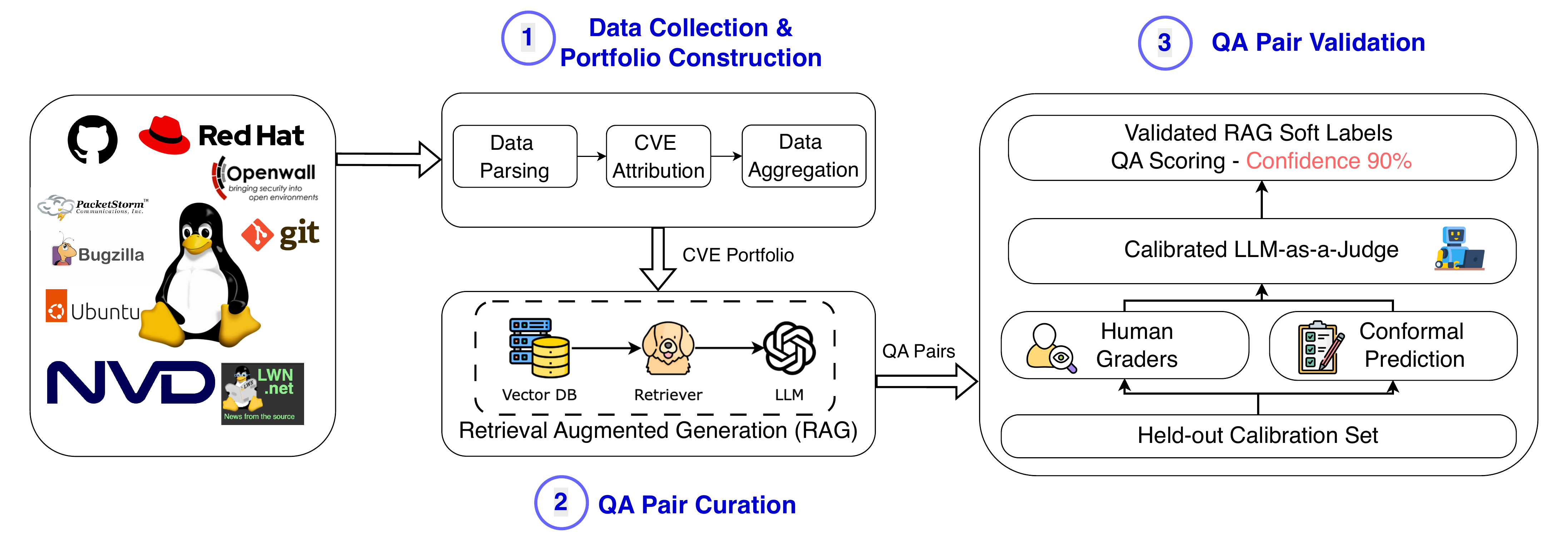 OmniVul: A Holistic, Multi-Turn Conversational Benchmark for LLM-Based Vulnerability AssessmentVishnu Teja Kandalam, Viet Duong, Xiaochang Li, Minghui Yin, Vamsi Shankar Simhadri, Hung Pham, Huajie Shao, Xiaokuan Zhang, Yue XiaoKDD 2026 [Paper]OmniVul comprises 2,000 CVEs with question–answer pairs spanning 23 attributes, including detection, code localization, root cause analysis, and patch suggestion, and the evaluation against 5 SOTA LLMs demonstrates the lack of critical reasoning capabilities for reliable vulnerability assessment.
 -
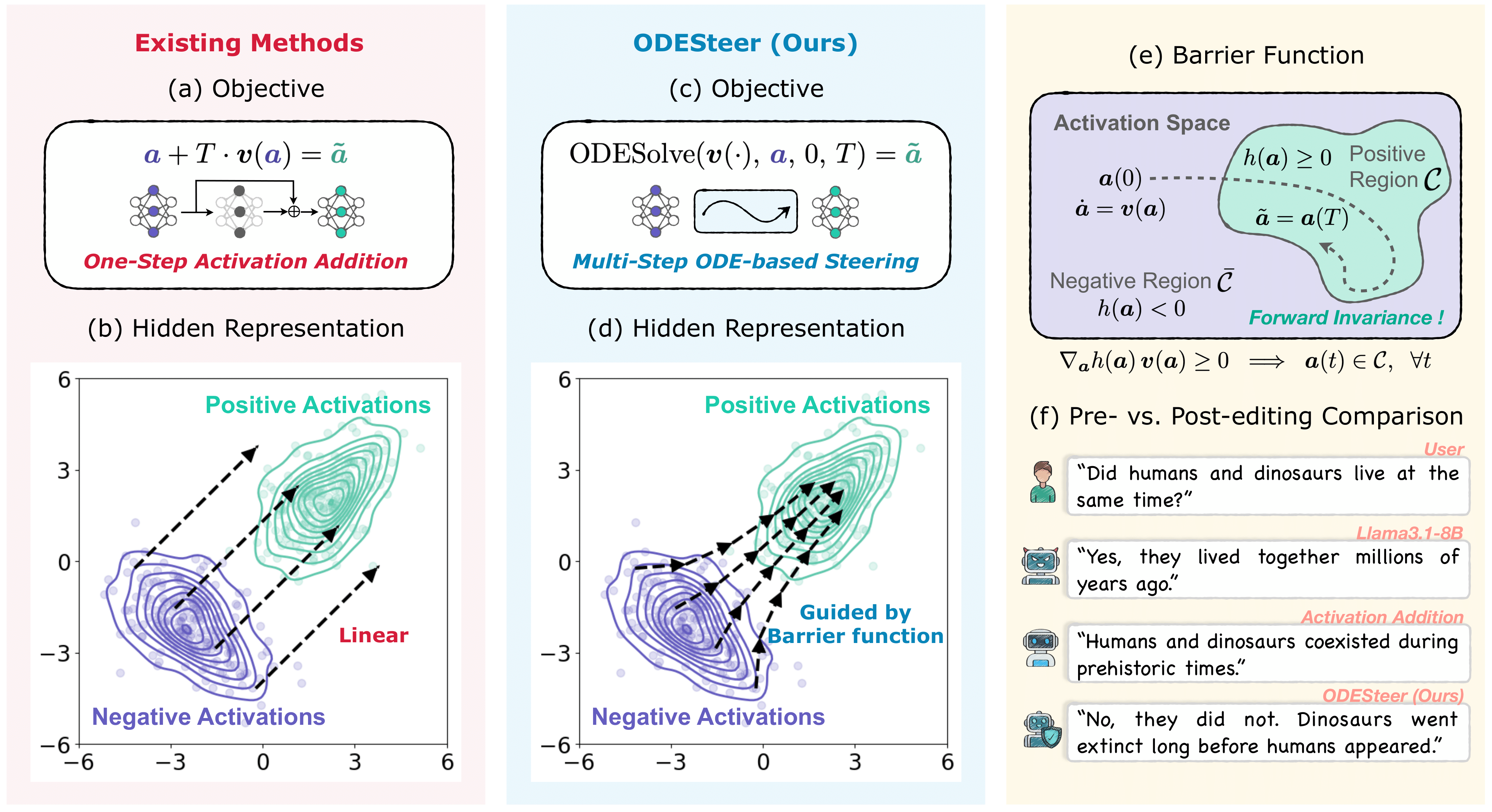 ODESteer: A Unified ODE-Based Steering Framework for LLM AlignmentHongjue Zhao*, Haosen Sun*, Jiangtao Kong, Xiaochang Li, Qineng Wang, Liwei Jiang, Qi Zhu, Tarek Abdelzaher, Yejin Choi, Manling Li†, Huajie Shao†A unified ODE-based framework for multi-step activation steering that achieves consistent gains on TruthfulQA (+5.7%), RealToxicityPrompts (+2.4%), and UltraFeedback (+2.5%).
 -
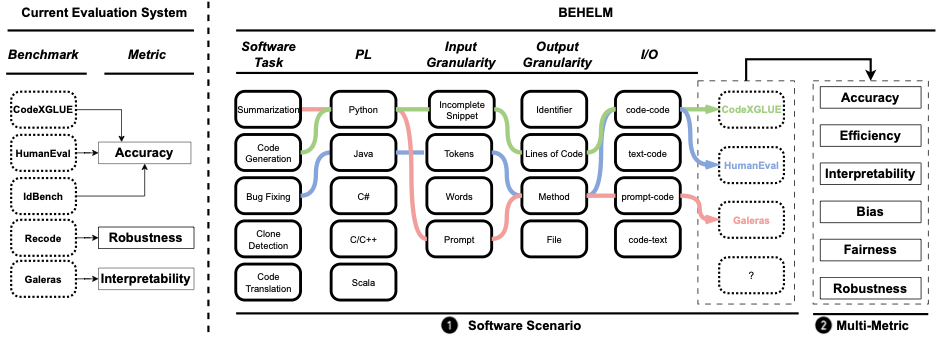 Towards Comprehensive Benchmarking Infrastructure for LLMs In Software EngineeringDaniel Rodriguez-Cardenas, Xiaochang Li, Marcos Macedo, Antonio Mastropaolo, Dipin Khati, Yuan Tian, Huajie Shao, Denys PoshyvanykFORGE 2026 [Paper]A holistic benchmarking infrastructure for evaluating LLMs in software engineering with multi-metric assessment across robustness, fairness, and real-world usability.
 -
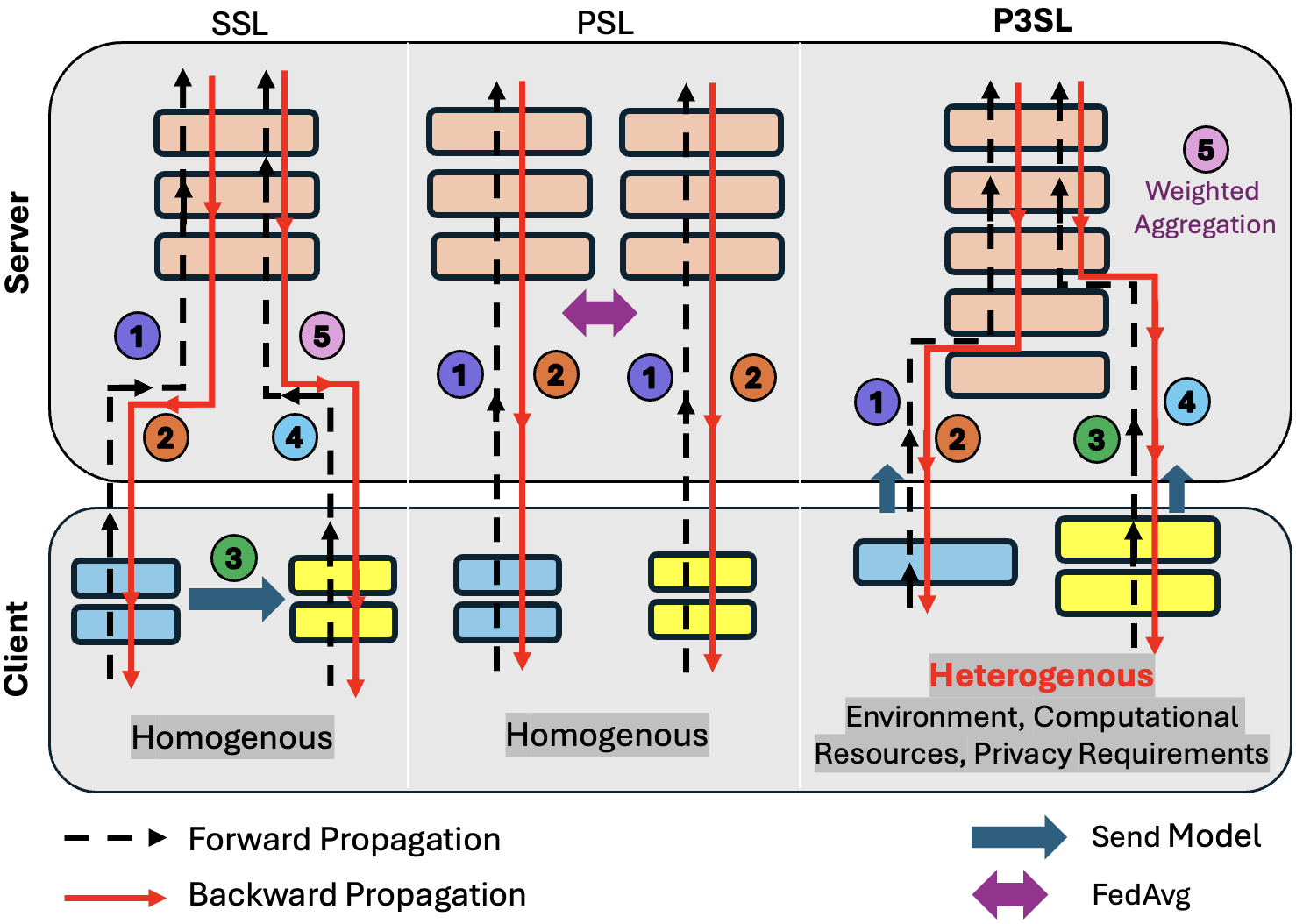 P3SL: Personalized Privacy-Preserving Split Learning on Heterogeneous Edge DevicesWei Fan, JinYi Yoon, Xiaochang Li, Huajie Shao, Bo JiICCCN 2025 [Paper]A personalized privacy-preserving approach for split learning that adapts to heterogeneous computational resources and privacy requirements across edge devices.
 -
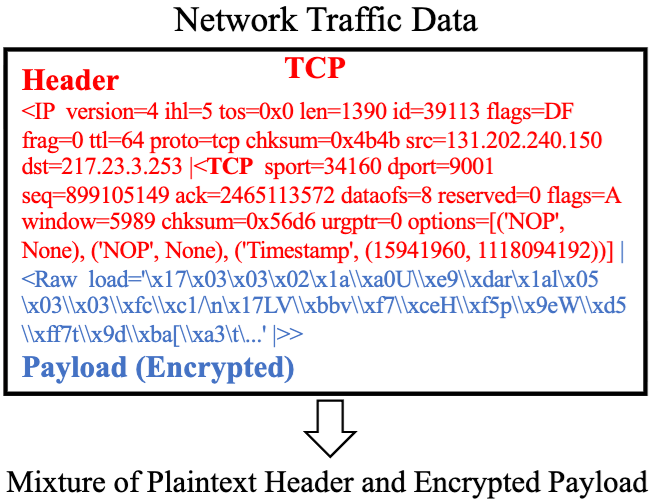 NetBench: A Large-Scale and Comprehensive Network Traffic Benchmark Dataset for Foundation ModelsChen Qian*, Xiaochang Li*, Qineng Wang, Gang Zhou, Huajie ShaoFMSys 2024 [Paper]A comprehensive benchmark dataset for training and evaluating foundation models on network traffic analysis tasks.
Service
-
Conference Reviewer
- NeurIPS 2024 2025 2026
- KDD 2024
-
Workshop Reviewer
- EACL 2026
- AACL-IJCNLP 2025
- EMNLP 2025
- ACL 2025
- EMNLP 2024
- SeT LLM @ ICLR 2024
Talks
-
"Network Foundation Models for Cybersecurity" (Poster)
DMV Security Workshop 2024, March 2024
[Workshop]
Honors & Awards
- Ph.D. Candidate Qualification - William & Mary (2024)
- Outstanding Graduate - East China Normal University (2023)
- Graduate Research Scholarship - William & Mary (2023-2027)